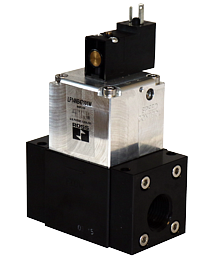




Leak Tight, Standard & Low Pressure, Vacuum [CX & LX Series] Individual Solenoid & Air Pilot Valve & Valve Manifolds
![Leak Tight, Standard & Low Pressure, Vacuum [CX & LX Series]](https://ross-admin-global-us-east.s3.us-east-2.amazonaws.com/production/uploads/series_image/image/2233/Dale-Series_LF_LX_2w_sc_valve.png)
 Product Catalog
Installation Instructions
Product Catalog
Installation Instructions
- Leak Tight & Vacuum Applications
- Positive Sealing
- Self-Cleaning and Dirt Tolerant
- Repeatability Over the Life of the Valve
- Self-Compensating for Wear
Base Mounted Valves CX & LX Series Product Overview
The Series CX 2- or 3-way valves are available in normally open, normally-closed with solenoid and remote pilot configurations. The 2-way valves range from 3/8” to 21/2” pipe size with an impressive Cv range of 3.5 to 100. This high-flow capability is a unique and valuable feature in such a compact valve manifold design. The 3-way valves range from 1/2” to 1” pipe size and have a Cv range of 3.2 to 12.3. These valves can be ordered with inline or manifold base-mounted configurations (with through-holes), depending on the application requirements.
This manifold capability allows customers to save time and money otherwise spent on piping and reduces potential leak paths, which saves energy. For added flexibility, the valves are available with customer-specified manifolds, allowing them to combine normally-open, normally-closed, solenoid pilot or remote pressure control operation together in one manifold to create simple valve systems for traditionally complicated applications.
For example, a common application for these valves is on equipment where media of different pressure levels (including vacuum) may need to be applied sequentially to a common work piece. Instead of piping up several valves together with hard pipe, the Series CX valves can be configured into a common manifold. This is mostly possible due to the valves’ revolutionary port pressure independence which can solve many configuration issues and provide customers with infinite design possibilities.
Please refer to the side and below for links to easily navigate and download Base Mounted Valves CX & LX Series catalogs, installation instructions, and technical data. Additionally, you have the option to filter through all available options to discover the Base Mounted Valves CX & LX Series catalogs, variant that meets your requirements.
loading...
loading...
Product Overview
The ROSS Controls encompasses the CX and LX families of Dale Series poppet directional control valves, engineered specifically for applications requiring leak tight performance, low pressure operation, vacuum capability, and process control. These externally piloted valves deliver a rare combination of high-flow capacity, compact envelope, and port pressure independence that makes them uniquely suited for complex manifold configurations handling multiple pressure levels, including full vacuum, on a single assembly.
The CX Series offers both 2/2 (two-way, two-position) and 3/2 (three-way, two-position) configurations in normally closed and normally open functions. Two-way CX valves span port sizes from 3/8 inch through 2-1/2 inch with a Cv range of 3.5 to 108, while three-way CX valves cover 3/8 inch through 1 inch with Cv values from 3.5 to 12.3. Both solenoid pilot controlled and pressure controlled actuation options are available. Manifold assemblies accommodate two to ten stations, enabling customers to combine normally open, normally closed, solenoid pilot, and remote pressure control operations on a single manifold base, eliminating inter-valve piping and reducing potential leak paths.
The LX Series provides 2/2 normally closed and normally open inline-mounted poppet valves for the same vacuum-leak tight application space, covering port sizes from 3/8 inch through 2-1/2 inch with Cv values up to 62.7. Select LX models integrate speed controls for direct adjustment of actuator velocity without external flow control valves. Like the CX Series, LX valves are available in both solenoid pilot controlled and pressure controlled configurations.
Both series leverage ROSS's proven poppet construction, a design in which inlet air pressure forces the poppet seal perpendicularly against its seat, creating a sealing force that increases with supply pressure. This geometry eliminates sliding friction, prevents seal wear, provides positive shut-off, and allows the valves to operate reliably from full vacuum to 145 psig (solenoid models) or 250 psig (pressure controlled models). The self-cleaning high-velocity flow path across poppet seats ensures strong dirt tolerance and long service life with non-lubricated air.
A key differentiator of the series is revolutionary port pressure independence, which allows each valve station in a manifold to be supplied from a different pressure source, including vacuum. This capability solves configuration challenges common in plastic molding, packaging, material handling, and process automation, where media at different pressure levels must be sequenced to a common work piece without complex and expensive external piping.
Key Engineering Features
- Leak Tight and Vacuum Design - CX and LX Series valves are engineered specifically for leak tight, low pressure, vacuum, and process applications. They operate reliably from full vacuum to 250 psig, making them suitable for vacuum forming, blow molding, packaging, leak testing, and process isolation.
- Positive Poppet Sealing - Inlet air pressure forces the poppet seal perpendicularly against its seat, creating sealing force proportional to supply pressure. There is no sliding action, eliminating friction wear that causes erratic operation in spool valves and ensuring positive shut-off across the full operating pressure range.
- Self-Cleaning and Dirt Tolerant - The poppet design accelerates air velocity through the smallest flow area, directing high-velocity flow directly across the seating surfaces. This self-cleaning action continuously removes particulate from the seat area, maintaining consistent performance in contaminated industrial environments without requiring frequent maintenance.
- Port Pressure Independence - Each valve station in a manifold assembly can operate at a different inlet pressure, including vacuum. This unique capability allows engineers to combine valves handling multiple pressure levels on a single manifold base, replacing complex external piping networks with a compact, integrated solution.
- Self-Compensating Seals - Dynamic sealing technology automatically adjusts stroke length as seals wear over time, maintaining positive sealing throughout the valve service life without manual adjustment or scheduled seal replacement intervals.
- High-Flow Capacity in Compact Design - The CX Series achieves Cv values up to 108 (110,000 Nl/min) for 2/2 valves in the 2-1/2 inch port size, and the LX Series delivers up to 62.7 Cv (62,000 Nl/min). These high-flow ratings are achieved in a compact inline and manifold-mountable form factor, reducing machine footprint and installation costs.
- Manifold Flexibility with Mixed Configurations - CX manifolds accommodate two to ten stations and can combine normally open, normally closed, solenoid pilot controlled, and pressure controlled valves on the same base. Custom manifolds allow even normally open and normally closed functions at different port sizes to be integrated into a single assembly.
- Bidirectional Flow Capability - Full port flow design supports bidirectional air flow, enabling the valves to be used in applications where flow reversal is required without loss of performance or sealing integrity.
- Non-Lube Service - CX and LX Series valves do not require lubricated air for reliable operation, simplifying air preparation system design, reducing component counts, and lowering total system operating costs.
- Non-Locking Manual Override - Solenoid pilot controlled valves are equipped with a non-locking manual override as standard on normally closed configurations and on normally open valves in smaller port sizes, enabling commissioning, troubleshooting, and system verification without external tools or power.
- IP65 Solenoid Enclosure - All solenoid pilot controlled CX and LX valves carry an IP65 enclosure rating per IEC 60529, providing complete dust-tight protection and resistance to low-pressure water jets for reliable operation in harsh industrial and washdown environments.
- Speed Control Integration (LX Series) - Select LX Series models incorporate integrated speed controls that allow precise regulation of actuator speed in both extend and retract directions directly at the valve, eliminating the need for separate external flow control valves and reducing plumbing complexity.
Technical Specifications
General Specifications
| Parameter | Specification |
| Series | CX (2/2 and 3/2, inline and manifold); LX (2/2 inline) |
| Valve Family | Dale Series |
| Construction | Poppet |
| Valve Functions | 2/2 (NC/NO); 3/2 (NC/NO) |
| Actuation | Solenoid Pilot Controlled (external pilot required); Pressure Controlled (external pilot and control signal required) |
| Pilot Supply | External only; field conversion to internal pilot not applicable |
| CX 2/2 Port Sizes | 1/4, 3/8, 1/2, 3/4, 1, 1-1/4, 1-1/2, 2, 2-1/2 inch (NPT and G/BSPP) |
| CX 3/2 Port Sizes | 3/8, 1/2, 3/4, 1 inch (NPT and G/BSPP) |
| LX 2/2 Port Sizes | 3/8, 1/2, 3/4, 1, 1-1/4, 1-1/2, 2, 2-1/2 inch (NPT and G/BSPP) |
| CX 2/2 Maximum Flow (Cv) | 3.5 to 108 (3,400 to 110,000 Nl/min) |
| CX 3/2 Maximum Flow (Cv) | 3.5 to 12.3 (3,400 to 12,000 Nl/min) |
| LX 2/2 Maximum Flow (Cv) | 3.6 to 62.7 (3,500 to 62,000 Nl/min) |
| CX Inlet Pressure (Solenoid) | Vacuum to 145 psig (vacuum to 10 bar) for port sizes 3/8 to 2-1/2 inch; vacuum to 250 psig (17.2 bar) for 1/4 inch port |
| CX Inlet Pressure (Pressure Controlled) | Vacuum to 250 psig (vacuum to 17.2 bar) |
| LX Inlet Pressure (Solenoid) | Vacuum to 145 psig (vacuum to 10 bar) |
| LX Inlet Pressure (Pressure Controlled) | Vacuum to 250 psig (vacuum to 17.2 bar) |
| CX Pilot Pressure (Solenoid) | 30 to 145 psig (2 to 10 bar); must be equal to or greater than inlet pressure |
| CX 3/2 Pilot Pressure (Solenoid) | 50 to 145 psig; must be equal to or greater than inlet pressure |
| CX Pilot Pressure (Pressure Controlled) | 30 to 250 psig for 2/2; 50 to 250 psig for 3/2; must be equal to or greater than inlet pressure |
| LX Pilot Pressure (Solenoid) | 30 to 145 psig (2 to 10 bar); must be equal to or greater than inlet pressure |
| LX Pilot Pressure (Pressure Controlled) | 30 to 250 psig; must be equal to or greater than inlet pressure |
| Pilot Port Thread | 10-32 UNF or M5x0.8 (port sizes 1/4 to 1/2 inch); 1/8-27 NPT or G1/8 (port sizes 3/4 and larger) |
| Valve Body Material | Anodized cast aluminum |
| Poppet Material | Acetal and stainless steel |
| Seal Material | Buna-N (bonded sealing surfaces) |
| Mounting Type | Inline (single valves and LX); inline or manifold base-mounted with through-holes (CX) |
| Manifold Stations (CX) | 2 to 10 stations; custom configurations available |
| Flow Media | Filtered air; 5 micron filtration recommended. Consult ROSS for liquid applications. |
| Lubrication | Non-lube service; no air line lubrication required |
| Enclosure Rating | IP65 per IEC 60529 (solenoid models) |
| Electrical Connections | DIN EN 175301-803 Form A and Form C connector |
| CAD Models | Downloadable for all variants at rosscontrols.com |
Temperature Ratings
All CX and LX Series valves are rated for the same ambient and media temperature range. Buna-N seals are standard for the operating temperature range. Consult ROSS for applications outside the stated range.
| Configuration | Ambient Temperature | Media Temperature |
| CX and LX Series (All Models) | 40 to 120 F (4 to 50 C) | 40 to 175 F (4 to 80 C) |
Important: For media temperatures below 40 F (4 C), compressed air must be free of water vapor to prevent ice formation inside the valve. Standard operating temperature minimums are 40 F ambient and 40 F media for all CX and LX Series valve models.
Electrical Data (Solenoid Pilot Valves)
All solenoids are rated for continuous duty. Solenoid power consumption varies by port size. For port sizes 1/4 through 1 inch, lower wattage solenoids are used. For port sizes 1-1/4 through 2-1/2 inch, higher wattage solenoids apply.
| Voltage | Power Consumption |
| 24 VDC (port sizes 1/4 to 1 inch) | 1.2 watts |
| 110 VAC, 50 Hz (port sizes 1/4 to 1 inch) | 5.4 VA |
| 120 VAC, 60 Hz (port sizes 1/4 to 1 inch) | 5.0 VA |
| 24 VDC (port sizes 1-1/4 to 2-1/2 inch) | 5.8 watts nominal; 6.5 watts maximum |
| 110 VAC, 50 Hz (port sizes 1-1/4 to 2-1/2 inch) | 5.8 VA nominal; 6.5 VA maximum |
| 120 VAC, 50/60 Hz (port sizes 1-1/4 to 2-1/2 inch) | 5.8 VA nominal; 6.5 VA maximum |
Electrical Connection Options
| Connection Type | Coil Code |
| DIN EN 175301-803 Form A | Standard for port sizes 1-1/4 to 2-1/2 inch |
| DIN EN 175301-803 Form C | Standard for port sizes 1/4 to 1 inch |
| Lighted Connector (24 VDC), Form C - part 2453K77-W | Port sizes 1/4 to 1 inch |
| Lighted Connector (120 VAC), Form C - part 2453K77-Z | Port sizes 1/4 to 1 inch |
| Pre-wired Connector (24 VDC), Form C - part 2476K77-W | Port sizes 1/4 to 1 inch; 2 m (6.5 ft) cord |
| Pre-wired Connector (120 VAC), Form C - part 2476K77-Z | Port sizes 1/4 to 1 inch; 2 m (6.5 ft) cord |
| Lighted Connector (24 VDC), Form A - part 936K87-W | Port sizes 1-1/4 to 2-1/2 inch |
| Lighted Connector (120 VAC), Form A - part 936K87-Z | Port sizes 1-1/4 to 2-1/2 inch |
| Pre-wired Connector (24 VDC), Form A - part 720K77-W | Port sizes 1-1/4 to 2-1/2 inch; 2 m (6.5 ft) cord |
| Pre-wired Connector (120 VAC), Form A - part 720K77-Z | Port sizes 1-1/4 to 2-1/2 inch; 2 m (6.5 ft) cord |
Flow Performance Data
Flow performance data for CX Series 2/2 and 3/2 solenoid pilot controlled valves and LX Series 2/2 solenoid pilot controlled valves. Cv values are averages at rated conditions. All models require external pilot supply.
| Series | Function | Inlet Port Size | Body Size | Avg Cv | Inlet Pressure | Pilot Pressure psig | Weight lb (kg) |
| CX | 2/2 | 1/4 inch | 1/2 inch | 0.9 | Vac-250 psig | 70-145 | 1.3 (0.6) |
| CX | 2/2 | 3/8 inch | 1/2 inch | 3.5 | Vac-145 psig | 30-145 | 1.4 (0.6) |
| CX | 2/2 | 1/2 inch | 1/2 inch | 3.5 | Vac-145 psig | 30-145 | 1.4 (0.6) |
| CX | 2/2 | 3/4 inch | 1 inch | 12.3 | Vac-145 psig | 30-145 | 3.5 (1.6) |
| CX | 2/2 | 1 inch | 1 inch | 12.3 | Vac-145 psig | 30-145 | 3.5 (1.6) |
| CX | 2/2 | 1-1/4 inch | 1-1/2 inch | 44.9 | Vac-145 psig | 30-145 | 10.0 (4.6) |
| CX | 2/2 | 1-1/2 inch | 1-1/2 inch | 44.9 | Vac-145 psig | 30-145 | 10.0 (4.6) |
| CX | 2/2 | 2 inch | 2-1/2 inch | 108 | Vac-145 psig | 30-145 | 19.5 (8.9) |
| CX | 2/2 | 2-1/2 inch | 2-1/2 inch | 108 | Vac-145 psig | 30-145 | 19.5 (8.9) |
| CX | 3/2 | 3/8 inch | 1/2 inch | 3.5 | Vac-145 psig | 50-145 | 1.8 (0.8) |
| CX | 3/2 | 1/2 inch | 1/2 inch | 3.5 | Vac-145 psig | 50-145 | 1.8 (0.8) |
| CX | 3/2 | 3/4 inch | 1 inch | 12.3 | Vac-145 psig | 50-145 | 5.3 (2.4) |
| CX | 3/2 | 1 inch | 1 inch | 12.3 | Vac-145 psig | 50-145 | 5.3 (2.4) |
| LX | 2/2 | 3/8 inch | 3/8 inch | 3.6 | Vac-145 psig | 30-145 | 1.5 (0.7) |
| LX | 2/2 | 1/2 inch | 1/2 inch | 3.6 | Vac-145 psig | 30-145 | 1.5 (0.7) |
| LX | 2/2 | 3/4 inch | 3/4 inch | 12.2 | Vac-145 psig | 30-145 | 3.5 (1.6) |
| LX | 2/2 | 1 inch | 1 inch | 12.2 | Vac-145 psig | 30-145 | 3.5 (1.6) |
| LX | 2/2 | 1-1/4 inch | 1-1/4 inch | 36.1 | Vac-145 psig | 30-145 | 9.3 (4.2) |
| LX | 2/2 | 1-1/2 inch | 1-1/2 inch | 36.1 | Vac-145 psig | 30-145 | 9.3 (4.2) |
| LX | 2/2 | 2 inch | 2 inch | 62.7 | Vac-145 psig | 30-145 | 19.3 (8.8) |
| LX | 2/2 | 2-1/2 inch | 2-1/2 inch | 62.7 | Vac-145 psig | 30-145 | 19.3 (8.8) |
Response Time Formula: All CX and LX valves require external pilot supply. Pilot pressure must be equal to or greater than inlet pressure at all times. For pressure controlled models, both an external pilot supply and a separate control signal are required. The valve shifts to the open position when the control signal is applied.
Certifications & Compliance
| Certification/Standard | Detail |
| Enclosure Rating | IP65 per IEC 60529 for all solenoid pilot controlled models. Provides complete dust-tight protection and resistance to low-pressure water jets. |
| Electrical Connections Standard | DIN EN 175301-803 (Form A and Form C) for all solenoid pilot controlled CX and LX Series valves. |
| Declaration of Conformity | CE marking available. Contact ROSS Controls for current Declaration of Conformity documentation. |
| Solenoid Duty Rating | All solenoids rated for continuous duty operation, enabling sustained energization without thermal derating or shortened service life. |
Typical Applications & Industries
Vacuum Forming, Blow Molding, and Plastic Processing
- Vacuum forming operations requiring fast, positive isolation of vacuum supply lines during mold cycle transitions. CX manifold assemblies allow multiple vacuum channels at different pressure levels to be controlled from a single base without external piping.
- Blow molding equipment where high-volume air blast and vacuum recovery sequences must be precisely timed. The high Cv ratings of the CX Series (up to 108) enable rapid mold charging and exhaust within cycle time constraints.
- Plastic injection molding with vacuum venting of mold cavities, where positive sealing prevents cavity contamination between shots and port pressure independence allows vacuum and positive pressure functions to coexist on one manifold.
Packaging and Food Processing
- Vacuum packaging lines for food and chemical products, where leak tight construction prevents product contamination and maintains vacuum integrity throughout the seal cycle.
- Case erecting, carton sealing, and palletizing systems benefiting from the high-flow, self-cleaning poppet design and compact manifold configurations that reduce machine footprint.
- Form-fill-seal packaging machines that apply vacuum and positive pressure to film handling and sealing jaws, where the ability to sequence different pressure levels on a common manifold simplifies machine design.
Leak Test and Quality Control
- Pressure decay and differential pressure leak testing of assembled components in automotive, appliance, HVAC, and consumer products manufacturing. CX and LX valves provide the positive isolation required to establish and hold stable test pressures.
- Multi-channel test fixtures requiring simultaneous or sequential pressurization and venting of multiple test cavities. CX manifolds with mixed normally open and normally closed functions at different port sizes enable complete test cycle control from a single valve assembly.
- Flow test systems that require isolation of reference volumes and precise switching between fill, measure, and exhaust phases. The leak tight poppet construction ensures that zero-leakage isolation is maintained during the measurement phase.
Pulp, Paper, and Process Industries
- Pulp and paper processing where valves must handle pulp slurries and process media without valve contamination. The self-cleaning poppet design and robust construction resist clogging in abrasive-media environments.
- Steel mill pickling lines and cooling water circuits where positive sealing of process media prevents cross-contamination and the non-lube design avoids oil contamination of process streams.
- Power generation cooling water systems where the wide inlet pressure range (vacuum to 145 psig) and robust poppet construction ensure reliable operation across varying cooling water system pressures.
Material Handling and Automation
- Vacuum pick-and-place systems for part handling, where the wide Cv range and compact manifold design allow designers to optimize valve sizing for the specific cup area and cycle time requirements of each station.
- Pneumatic cylinder control in general factory automation, where the 3/2 CX valve ported directly to cylinder rod and cap end ports eliminates external plumbing, reduces line loss, and improves cylinder control accuracy.
- Semiconductor and electronics manufacturing for clean air directional control in process isolation and pressurization systems, where the non-lube, leak tight design avoids contamination of sensitive process environments.
Industrial Mineral and Mining
- Industrial mineral processing and mining applications where valves are exposed to dusty, abrasive environments. The high-velocity self-cleaning flow path prevents particulate accumulation on seating surfaces, sustaining reliable performance without additional filtration measures.
- Bulk material handling pneumatic conveying systems that require frequent valve cycling and robust construction to withstand abrasive media contact.
Ordering and Model Number Configuration
ROSS CX and LX valves use a structured model number system. The model number encodes the series, function, valve type, thread type, port size, and voltage. Below is a guide to reading CX and LX Series model numbers with examples.
|
CX Series Model Number Structure (2/2 Solenoid Pilot Controlled, Normally Closed):
CX 1 4 N B 3 7 5 0 1 W | | | | CX = Series (CX = Compact Poppet, Leak Tight)
1 = Function (1=2/2 NC, 2=2/2 NO, 3=3/2 NC, 4=3/2 NO)
4 = Body Size (2=1/2 body, 4=1/2 body, 6=1 body, 8=1-1/2 body, 0=2-1/2 body)
N = Thread Type (N = NPT; D = G/BSPP)
B = Revision Level
37 = Port Size Code (37=3/8 inch, 47=1/2 inch, 57=3/4 inch, 67=1 inch 77=1-1/4 inch, 87=1-1/2 inch, 97=2 inch, 07=2-1/2 inch, 27=1/4 inch)
5 = Pilot Type (5 = external pilot supply required)
0 = Additional Code
1 = Pressure Controlled Indicator (1 = solenoid pilot; 5 = pressure controlled)
W = Voltage (W = 24 VDC; Z = 110/120 VAC)
LX Series example (2/2 NC Solenoid Pilot Controlled, 3/4 inch NPT): LX15NB57501W LX = Series (LX = Inline Poppet, Leak Tight) 15 = Body/Size Code (5 = 3/4 body) NB = Thread (N=NPT, B=Revision) 57 = Port Size Code (57 = 3/4 inch) 501 = External Pilot, Solenoid Pilot W = 24 VDC
For BSPP (G) threads, replace N with D (e.g., CX14DB37501W). For external pilot supply on CX Series, the 5 in position 9 denotes external pilot. |
Voltage codes: W = 24 VDC; Z = 110 VAC 50 Hz or 120 VAC 50/60 Hz.
For BSPP (G) threads, replace the N in the thread position of the model number with D (e.g., CX14DB37501W for a 3/8 inch BSPP 2/2 NC solenoid valve).
Manifold versions of the CX Series are ordered by inserting the number of stations (2 through 9, or 0 for 10 stations) before the voltage code in the model number. Example: CX14NB37514W = 4-station manifold, 3/8 inch port, 24 VDC solenoid.
For pressure controlled CX and LX valves, substitute 5 for the actuation digit in the model number. Both an external pilot supply and a control signal are required for pressure controlled models.
Custom manifolds combining mixed functions (normally open, normally closed, different port sizes) are available. Contact ROSS Controls or refer to configuration worksheet in the Dale Series catalog.
For 1-station manifold versions of CP Series, refer to the single CX Valve product page. Manifolds start at 2 stations.
Consult ROSS Controls at (800) 438-7677 for applications involving liquid media, special materials, or configurations not shown in the standard catalog.
Accessories
Electrical Connectors
ROSS offers DIN EN 175301-803 Form A and Form C connectors for all CX and LX Series solenoid valves. Options include standard (no indicator light), lighted versions with integral LED for visual solenoid-energized indication, and pre-wired assemblies with 2 meter (6.5 foot) cable. Lighted and pre-wired connectors are available in 24 VDC and 120 VAC ratings. Form C connectors (parts 2453K77-W, 2453K77-Z, 2476K77-W, 2476K77-Z) are used with port sizes 1/4 to 1 inch. Form A connectors (parts 936K87-W, 936K87-Z, 720K77-W, 720K77-Z) are used with port sizes 1-1/4 to 2-1/2 inch.
| Connector Type | Voltage | Model Number | Cable Length |
| Lighted, Form C | 24 VDC | 2453K77-W | None (connector only) |
| Lighted, Form C | 120 VAC | 2453K77-Z | None (connector only) |
| Pre-wired, Form C | 24 VDC | 2476K77-W | 2 m (6.5 ft) |
| Pre-wired, Form C | 120 VAC | 2476K77-Z | 2 m (6.5 ft) |
| Lighted, Form A | 24 VDC | 936K87-W | None (connector only) |
| Lighted, Form A | 120 VAC | 936K87-Z | None (connector only) |
| Pre-wired, Form A | 24 VDC | 720K77-W | 2 m (6.5 ft) |
| Pre-wired, Form A | 120 VAC | 720K77-Z | 2 m (6.5 ft) |
Exhaust Silencers
Aluminum exhaust silencers are available for 3/2 CX Series valves to reduce exhaust noise in production environments. Silencers attach to the exhaust port and are rated for 0 to 300 psig (0 to 20.7 bar). Silencer flow capacity must be equal to or greater than the exhaust capacity of the valve; undersized or contaminated silencers can cause increased back pressure and affect valve operation.
| Port Size | Thread | Avg Cv (Nl/min) | Model (NPT) | Model (G/BSPP) |
| 1/2 inch | Male | 4.7 (4,600) | 5500A4003 | D5500A4003 |
| 1 inch | Male | 14.6 (14,400) | 5500A6003 | D5500A6003 |
Warning: Silencers must have flow capacities at least as great as the exhaust capacities of the valves. Contaminated silencers cause increased back pressure and can prevent proper valve operation.
CX Series Manifold Assemblies
CX Series manifold assemblies are preassembled from two to ten valve stations on an anodized aluminum manifold base. Manifolds can be ordered with identical valve configurations (same model for all stations) or in custom mixed configurations combining normally open, normally closed, solenoid pilot, and pressure controlled stations at the same or different port sizes. Mixed-configuration manifolds must be ordered using the ROSS custom manifold configuration worksheet available in the Dale Series CX, LX, and LT catalog. Contact ROSS Controls for custom manifold configurations.
Related Products & Accessories
- Dale CP Series Standard Pressure Valves and Manifolds - The CP Series provides the same compact poppet valve platform as the CX Series but for standard pressure applications with a minimum 30 psig inlet pressure. CP Series valves can be internally or externally piloted and are available in 2/2 and 3/2 configurations with inline and manifold mounting options. https://www.rosscontrols.com/en/series/234-standard-pressure-cp-series
- Dale LF Series Standard Pressure Inline Valves - The LF Series offers the same speed-control-integrated inline valve design as the LX Series but for standard pressure applications. Internally or externally piloted in 2/2 configurations across port sizes 3/8 to 2-1/2 inch. https://www.rosscontrols.com/en/series
- Dale LT Series Leak Test Valve Manifolds - The LT Series provides 3/4 (three-way, four-position) valve manifolds purpose-engineered for pressure decay, differential pressure, and flow test applications. LT manifolds integrate multiple sensor ports and can be combined with CX manifolds for complete multi-chamber test circuit configurations. https://www.rosscontrols.com/en/series/237-leak-test-lt-series
- 21 Series Directional Control Valves - Inline poppet valves for standard, vacuum, high temperature, and low temperature applications in port sizes from 1/4 to 1-1/2 inch. Available with DIN, M12, and conduit electrical connections. https://www.rosscontrols.com/en/series/231-low-high-temperatures-classic-21-series
- 27 Series Directional Control Valves - High-flow inline poppet valves for standard temperature applications in port sizes from 1/4 to 2-1/2 inch with Cv up to 100. https://www.rosscontrols.com/en/series/230-standard-temperatures-classic-27-series
- Electrical Connectors - DIN EN 175301-803 Form A and Form C connectors, pre-wired assemblies, and lighted indicator versions for ROSS solenoid valves. https://www.rosscontrols.com/en/series/91-electrical-connectors
- Exhaust Silencers - Aluminum exhaust silencers rated to 300 psig for 3/2 CX Series valves in 1/2 inch and 1 inch port sizes. https://www.rosscontrols.com/en/series/90-silencers
Frequently Asked Questions (FAQ)
Q: What is the fundamental difference between the CX Series and LX Series valves in the product family?
A: The CX Series offers both 2/2 (two-way) and 3/2 (three-way) functions in inline and manifold-mounted configurations, with port sizes from 1/4 to 2-1/2 inch and Cv values up to 108. CX manifolds accommodate two to ten stations with the ability to mix normally open, normally closed, solenoid, and pressure controlled functions on the same base. The LX Series is limited to 2/2 (two-way) functions in inline mounting only, covers port sizes from 3/8 to 2-1/2 inch with Cv values up to 62.7, and offers integrated speed controls on select models. Both series are designed for leak tight, vacuum, and low pressure applications and require external pilot supply.
Q: Why do the CX and LX Series require external pilot supply rather than internal pilot?
A: External pilot supply is required because these valves are designed for vacuum, low pressure, and process applications where the inlet pressure may be below zero (vacuum) or too low to reliably actuate the valve. An internal pilot supply tapped from the inlet would not provide sufficient or consistent pilot pressure under these conditions. A separate external pilot supply at 30 to 145 psig (or 50 to 145 psig for 3/2 models) is required at all times and must be equal to or greater than the inlet pressure to ensure reliable valve actuation.
Q: Can CX and LX Series valves handle actual vacuum as the inlet media?
A: Yes. Both CX and LX Series solenoid pilot controlled valves are rated for inlet pressures from full vacuum to 145 psig (vacuum to 10 bar). Pressure controlled variants extend this to vacuum to 250 psig (vacuum to 17.2 bar). This makes them directly suitable for vacuum forming, vacuum packaging, pick-and-place, and leak testing applications where the valve must isolate or pass vacuum without allowing leak-by.
Q: What does port pressure independence mean, and why does it matter for manifold applications?
A: Port pressure independence means that each valve station in a manifold assembly can be supplied from a different pressure source, operating at a completely different inlet pressure including vacuum, without any one station affecting the operation of the others. In practice, this allows a machine designer to combine on a single CX manifold base one valve controlling a vacuum line, another controlling a low-pressure supply at 10 psig, and a third controlling a full 90 psig circuit. This replaces what would otherwise require three separate valves with separate external plumbing, reducing installation time, eliminating multiple potential leak points, and shrinking the valve assembly footprint.
Q: What materials are CX and LX Series valve bodies and seals made from?
A: Valve bodies and manifold bases are constructed of anodized cast aluminum for a combination of light weight, corrosion resistance, and durability. Poppets are made from acetal and stainless steel for wear resistance and compatibility with a broad range of process media. Seals are bonded Buna-N, providing reliable sealing within the rated operating temperature range of 40 to 175 degrees Fahrenheit media. For applications outside this range or involving non-air media, consult ROSS Controls.
Q: Can CX manifolds be ordered with mixed valve functions, such as some stations normally open and some normally closed?
A: Yes. CX manifolds can be ordered with custom mixed configurations combining normally open, normally closed, solenoid pilot controlled, and pressure controlled valve functions at the same or different port sizes. Standard preassembled manifolds are available for two to ten stations with identical valve models. For mixed configurations, ROSS provides a custom manifold configuration worksheet available in the Dale Series catalog or by contacting ROSS Controls directly at (800) 438-7677.
Q: What is the maximum number of stations available in a CX manifold assembly?
A: Standard preassembled CX manifold assemblies are available in two through ten stations. Custom manifolds with more stations or mixed configurations are available by contacting ROSS Controls. Single-station configurations in manifold base-mount form should be ordered as individual CX Series valves. The model number for manifold assemblies inserts the station count digit before the voltage code; the digit 0 is used for 10-station assemblies.
Q: What is the difference between solenoid pilot controlled and pressure controlled models?
A: Solenoid pilot controlled CX and LX valves shift when an electrical signal energizes the solenoid coil, which admits pilot air pressure to actuate the valve. These models require a 24 VDC or 110/120 VAC electrical signal and pilot pressure of 30 to 145 psig. Pressure controlled models have no solenoid coil and shift when a pneumatic control signal pressure is applied; they require both an external pilot supply and a separate pneumatic control signal. Pressure controlled models are used in applications where electrical control is unavailable, in hazardous areas, or where high pilot pressures (up to 250 psig) are advantageous.
Q: What filtration level is recommended for supply air to the CX and LX Series valves?
A: ROSS recommends 5-micron filtration for the supply air to CX and LX Series valves. While the poppet design is inherently self-cleaning and dirt tolerant, providing filtered air at this level maximizes valve service life, protects sealing surfaces, and is consistent with best practices for pneumatic system maintenance. The air should also be dry; at media temperatures below 40 degrees Fahrenheit, compressed air must be free of water vapor to prevent ice formation inside the valve.
Q: Are CX and LX Series valves suitable for liquid media applications?
A: Standard CX and LX Series valves are designed for filtered compressed air service. The catalog notes that these valves may be considered for certain liquid applications, but consultation with ROSS Controls is required before specifying the valve for any liquid media. ROSS engineers can advise on seal compatibility, flow characteristics in liquid service, and any modifications required for the intended application.
Q: What manual override options are available on solenoid pilot controlled CX and LX Series valves?
A: Normally closed CX and LX valves in all port sizes are equipped with a non-locking push-button manual override as standard. Normally open valves in port sizes 1/2 and 1 inch also include a non-locking override. Normally open valves in larger port sizes (1-1/2 and 2-1/2 inch bodies) use a locking turn-to-lock style manual override. The non-locking override allows the valve to be manually actuated during commissioning, troubleshooting, or maintenance without requiring electrical power, and the valve returns to its spring position when the override is released.
Q: How do integrated speed controls on LX Series valves work?
A: Select LX Series models incorporate adjustable needle-type speed controls integrated into the valve body. These controls regulate the flow rate of air in both the fill and exhaust directions independently, allowing the operator to adjust the speed of a connected actuator in both extend and retract motions without external flow control valves. This simplifies system plumbing, reduces the number of separate components, and allows fine-tuning of machine cycle times directly at the valve. The integrated design also reduces potential leak points compared to separate inline flow controls.
Q: Where can I download the Dale Series CX, LX, and LT catalog?
A: The complete Dale Series CX, LX, and LT directional control valves catalog is available for download from the ROSS Controls documentation library at https://www.rosscontrols.com/en/documents/6382. The catalog includes full technical specifications, dimensional drawings, ordering information, electrical connector details, and application guidance for all three series.
Q: What is the expected lead time for CX and LX Series valves?
A: Standard catalog models of the CX and LX Series valves are typically available with lead times of three to four weeks for quantities of ten units or fewer. Custom manifold assemblies and special configurations may require additional lead time. Contact ROSS Controls at (800) 438-7677 for current availability and lead time information for specific configurations.
Installation & Maintenance Guidelines
- Ensure an external pilot supply is connected to the pilot port (X-1) of each CX or LX valve before operation. The pilot pressure must be between 30 and 145 psig (50 to 145 psig for 3/2 models) and must be equal to or greater than the inlet pressure at all times. The valve will not actuate without adequate pilot supply pressure.
- For pressure controlled CX and LX models, connect both the external pilot supply (X-1 port) and the pneumatic control signal. The valve shifts to the open position only when the control signal is applied; the pilot supply alone does not shift the valve.
- Provide filtered compressed air at 5-micron filtration or better upstream of each valve. Although the poppet design is self-cleaning, filtered air maximizes service life and protects sealing surfaces from abrasive wear.
- Mount CX and LX Series valves in any orientation. Inline mounting is standard. For manifold assemblies, mount horizontally on a flat, rigid surface using the through-hole mounting provisions on the manifold base.
- Do not restrict the supply lines or exhaust ports. Undersized supply lines or restricted exhausts can reduce inlet or pilot pressure below the minimum operating threshold and cause erratic valve performance or failure to actuate.
- When installing exhaust silencers on 3/2 CX Series valves, verify that the silencer flow capacity (Cv) is equal to or greater than the exhaust Cv of the valve. Contaminated or undersized silencers increase back pressure on the exhaust port, which can prevent the valve from completing its stroke.
- Ensure that all pipe connections to the valve body are made with correctly sized fittings and that thread sealant is applied to NPT threads. Do not over-torque; aluminum bodies can be damaged by excessive torquing of fittings. Use BSPP (G) thread valves where metric fittings are required.
- For vacuum applications, verify that all connections between the vacuum source and the valve inlet are leak free before operating the system. Use appropriate vacuum-rated tubing and fittings throughout the circuit.
- When installing solenoid pilot controlled valves, route the electrical supply cable away from high-temperature surfaces, pinch points, and areas of heavy vibration. Use the DIN connector strain relief to protect the cable entry point.
- Do not exceed the maximum rated inlet pressure of the valve. For solenoid pilot CX models, the maximum inlet is 145 psig (250 psig for 1/4 inch port models). For solenoid pilot LX models, the maximum inlet is 145 psig. Exceeding these limits can damage seals and cause valve failure.
- For media temperatures below 40 degrees Fahrenheit, compressed air must be dried to a dew point below the minimum expected media temperature to prevent moisture condensation and ice formation on seating surfaces inside the valve.
- When assembling CX manifolds on equipment, verify that the manifold base is not exposed to mechanical stress from pipe connections pulling in multiple directions. Support the manifold base independently and connect piping with flexible couplings where movement or vibration is anticipated.
- After installation, cycle each valve several times under pilot pressure with no inlet supply to verify mechanical operation before introducing process air or vacuum. Confirm that manual override operates correctly and that the valve returns to its spring position when the override is released.
- Perform periodic inspection of exhaust silencers and replace when flow restriction increases or when physical contamination is observed. A clogged silencer is a common cause of reduced cycle speed and apparent valve malfunction.
- Contact ROSS Controls Technical Services at 1-888-TEK-ROSS (835-7677) before using CX or LX Series valves with liquid media, aggressive chemicals, or in operating conditions outside the rated temperature and pressure specifications.
Warranty & Global Support
ROSS Controls provides a one-year warranty on all CX and LX Series Dale Series products, covering defects in material and workmanship from the date of purchase.
Global technical support is available through ROSS Controls offices in the USA (headquarters in Ferndale, Michigan), Canada, Brazil, Germany, France, United Kingdom, India, China, and Japan.
Contact ROSS Controls USA technical support at 1-888-TEK-ROSS (835-7677) for product configuration assistance, application engineering, and troubleshooting support.
For complete technical data including dimensional drawings, electrical connector specifications, flow performance curves, and valve configurator access, visit the ROSS Controls Series 235 product page at https://www.rosscontrols.com/en/series/235-leak-tight-standard-low-pressure-vacuum-cx-lx-series or contact ROSS Controls at (800) 438-7677.
Downloadable CAD models are available for all CX and LX Series valve variants at rosscontrols.com to support machine design integration.
Download Catalog: https://www.rosscontrols.com/en/documents/6382?filename=Directional_Control_Valves_ROSS-DALE-CX-LX-LT_EN.pdf
Download Documents
Leak Tight, Standard & Low Pressure, Vacuum [CX & LX Series]