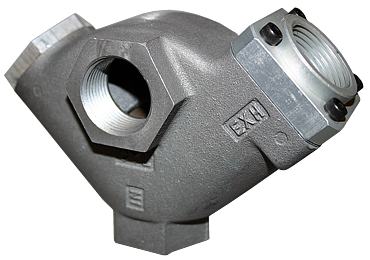




Quick Exhaust Valves 18 Series
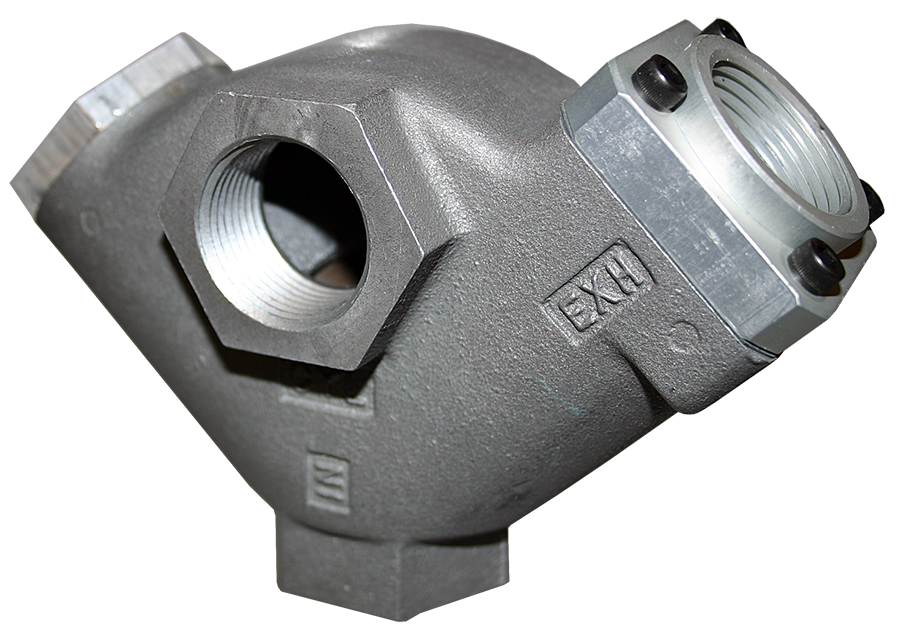
 Installation Instructions
Product Catalog
Installation Instructions
Product Catalog
- Inline Mounting
- Poppet Construction
- Quick Cylinder Reversal
Quick Exhaust Valves 18 Series Product Overview
ROSS quick exhaust valve function is to provide a rapid exhaust of controlled air when placed directly onto an air cylinder after the control valve. Quick cylinder reversal can be a problem if the control valve is at a distance from the cylinder or otherwise restricts the exhaust flow. A ROSS quick exhaust valve near the cylinder opens as soon as the controls valve begins exhausting, and thus allows quick reversal of the cylinder.
Please refer to the side and below for links to easily navigate and download ROSS Controls Quick Exhaust Valves 18 Series catalogs, installation instructions, and technical data. Additionally, you have the option to filter through all available options to Quick Exhaust Valves 18 Series variant that meets your requirements.
loading...
loading...
Product Overview
The ROSS Controls 18 Series Quick Exhaust Valves are purpose-designed pneumatic valves that dramatically reduce cylinder retraction cycle times by providing a short-path exhaust route directly at the cylinder port, bypassing the flow restriction of the remote control valve and connecting supply and exhaust piping. When mounted as close to the cylinder as possible, the quick exhaust valve reduces the effective volume of air that must travel through the control valve and piping during retraction, enabling the cylinder to exhaust at the full flow rate permitted by the exhaust port size rather than the restricted rate imposed by the remote plumbing.
The 18 Series quick exhaust valve operates on a straightforward poppet principle with a 3/2 function. During cylinder extension, supply air from the control valve enters port 1, pushes the poppet to block the exhaust port (port 3), and flows freely through to the cylinder (port 2). When the control valve shifts to exhaust the cylinder, pressure at port 1 drops. The pressure differential from the cylinder side (port 2) shifts the poppet to close port 1 and open the large exhaust port (port 3) directly to atmosphere. This short-path exhaust bypasses the full length of connecting tubing and the control valve's exhaust orifice, allowing the cylinder to reverse at maximum speed.
The performance advantage of a quick exhaust valve is most significant when the control valve is at a distance from the cylinder, when connecting tubing is long or small-bore, or when the control valve's exhaust Cv is smaller than the cylinder's demand. In these situations, the quick exhaust valve can reduce retraction cycle times by 50 percent or more compared to exhausting through the control valve alone.
The 18 Series uses poppet construction throughout, providing the self-cleaning, contamination-tolerant performance that characterizes ROSS's 19 Series ancillary valve product family. The inlet (port 1) accepts supply from the control valve, port 2 connects to the cylinder, and port 3 is the large direct-to-atmosphere exhaust port. All models are available in NPT and BSPP (G) thread formats, and the -40 to 175 F (-40 to 80 C) temperature rating covers the full range of industrial and outdoor operating conditions.
Key Engineering Features
- Short-Path Exhaust for Maximum Cylinder Reversal Speed - Mounting the quick exhaust valve directly at or near the cylinder port reduces exhaust path length to a minimum, allowing the cylinder to exhaust at the full capacity of the exhaust port (port 3) rather than being limited by the control valve Cv and connecting tubing.
- 3/2 Poppet Construction - The 3/2 poppet valve function uses a differential poppet that responds to pressure differential between the supply inlet (port 1) and the cylinder port (port 2), providing fast, consistent response with minimal moving mass and no sliding seals that can stick or wear.
- Automatic Supply-to-Exhaust Switching - The poppet shifts automatically from connecting supply-to-cylinder (port 1 to port 2) to connecting cylinder-to-exhaust (port 2 to port 3) when the control valve begins exhausting. No additional signal or control input is required.
- High Exhaust Cv Relative to Supply Cv - The exhaust port (1-4 path, port 2 to port 3) has a higher Cv than the supply path (1-2 path, port 1 to port 2), ensuring that exhaust capacity exceeds supply capacity and eliminating exhaust restriction as the limiting factor in retraction speed.
- Poppet Construction Tolerant of Dirty Air - Self-cleaning poppet design resists contamination-induced sticking and provides consistent response even in compressed air systems with moderate particulate content, reducing maintenance frequency in demanding industrial environments.
- Inline Mounting at Cylinder Port - All 18 Series models are designed for inline mounting directly in the cylinder port or as close to it as the installation allows. The inline geometry minimizes the additional dead volume added to the cylinder circuit by the valve itself.
- NPT and BSPP Thread Availability - All models are available with NPT threads for North American applications and with BSPP (G) threads for international equipment, designated by the 'D' prefix ordering convention.
- Extended Temperature Range - All 18 Series quick exhaust valve models are rated for ambient and media temperatures from -40 to 175 F (-40 to 80 C), enabling reliable operation in cold storage, outdoor, and moderately elevated-temperature industrial environments.
- Two Port Size Groups with Distinct Body Sizes - 3/8 and 1/2 in. port sizes share a compact 1/2 in. body with Cv 2.9/3.4, while 3/4 and 1 in. port sizes share a larger body with Cv 7.2/10, providing performance matched to the cylinder bore and circuit flow requirements.
- Cast Aluminum Body - Cast aluminum valve bodies provide low weight and corrosion resistance for inline mounting in pneumatic cylinder circuits, compatible with the full industrial operating environment.
Technical Specifications
General Specifications
| Parameter | Specification |
| Valve Type | Quick Exhaust Valve |
| Valve Series | 18 Series |
| Construction | Poppet |
| Function | 3/2 |
| Actuation | Pneumatic (self-actuating by differential pressure) |
| Mounting | Inline (at or near cylinder port) |
| Thread Types | NPT (standard); G/BSPP (add 'D' prefix to model number) |
| Port Sizes | 3/8", 1/2", 3/4", 1" |
| Exhaust Port Sizes | 3/8" exhaust on 3/8" and 1/2" models; 1" exhaust on 3/4" and 1" models |
| Cv Supply Path (1-2) | 2.9 (3/8" and 1/2" models); 7.2 (3/4" and 1" models) |
| Cv Exhaust Path (1-4 / port 2 to port 3) | 3.4 (3/8" and 1/2" models); 10 (3/4" and 1" models) |
| Operating Pressure | 5 to 150 psig (0.3 to 10 bar) |
| Flow Media | Filtered Air |
| Valve Body Material | Cast Aluminum |
Temperature Ratings
All 18 Series quick exhaust valve models share the same extended operating temperature range, suitable for cold storage, outdoor, and general industrial applications.
| Configuration | Ambient Temperature | Media Temperature |
| All 18 Series Quick Exhaust Valve Models | 40 to 175 F (-40 to 80 C) | 40 to 175 F (-40 to 80 C) |
Important: For temperatures below 40 F (4 C), compressed air must be free of water vapor to prevent ice formation at the poppet seating surfaces and exhaust port.
Certifications & Compliance
| Certification/Standard | Detail |
| Quality Management | ROSS Controls operates under an ISO 9001 certified quality management system, providing manufacturing consistency and component traceability. |
| Thread Standards | NPT threads comply with ANSI/ASME B1.20.1. BSPP (G) threads comply with ISO 228-1. |
| CE Marking | ROSS Controls products are manufactured to comply with applicable EU Machinery Directive requirements where applicable. |
Typical Applications & Industries
High-Cycle Automation and Assembly
- Pick-and-place actuator retraction on high-speed assembly machines where cycle time directly determines output rate. A quick exhaust valve at the cylinder rod-end port reduces retraction time by eliminating the exhaust flow bottleneck at the remote control valve, enabling more cycles per minute within the same compressed air system pressure.
- Vertical press and punch cylinder return stroke on stamping and forming presses where rapid tool retraction reduces total cycle time and allows the material feed to advance without waiting for the press to clear the working zone.
- Transfer bar and walking beam actuator retraction in transfer line machinery where all stations must retract synchronously, and the retraction phase determines the overall index time of the transfer sequence.
- Rotary actuator indexing on dial tables and turntables where the quick exhaust valve on the retract circuit reduces index time and improves machine output without increasing supply pressure or adding a larger control valve.
Long-Stroke and Large-Bore Cylinder Applications
- Large-bore press cylinders on 4 in. and larger bore hydraulic-substitute pneumatic presses, where the volume of air in the cap-end on retraction is significant. A quick exhaust valve at the cylinder port eliminates the need to push the entire cylinder volume through the control valve on retraction.
- Long-stroke conveyor gate and door actuators where the cylinder is at a significant distance from the control valve. In these installations, the connecting tubing becomes an additional volume that must exhaust through the control valve; the quick exhaust valve eliminates this penalty.
- Lift table and elevator cylinder retraction circuits where gravity-assisted descent is desired but must be controlled. The quick exhaust valve enables rapid initial descent while a flow control valve downstream of port 3 regulates the final descent speed.
- Workholding clamp and fixture cylinder unclamping operations on machining centers where rapid unclamping reduces load/unload time and directly improves machine utilization rate.
Material Handling and Packaging
- Palletizer and depalletizer cylinder retraction cycles where the speed of the return stroke determines the maximum system throughput. Quick exhaust valves at the cylinder caps allow retraction at the maximum rate achievable by the available supply pressure.
- Carton erector and case packer cylinder retraction where each actuator must return quickly to accept the next carton blank before the machine's timing sequence advances. Quick exhaust valves eliminate the retraction bottleneck without increasing system pressure.
- Bag sealing jaw actuator retraction on vertical form-fill-seal machines where rapid jaw opening after sealing is required to prevent heat transfer to the next bag. The short-path exhaust of a quick exhaust valve at the jaw cylinder minimizes this dwell time.
- Checkweigher and sorting diverter actuator retraction on high-speed conveyor lines where each actuation cycle must complete within the inter-product gap, and retraction speed directly determines the maximum line speed.
Cold Storage, Outdoor, and Harsh Environment
- Refrigerated warehouse and cold storage door cylinder retraction circuits at -40 F (-40 C), where the extended temperature rating of the 18 Series maintains poppet flexibility and consistent valve response in sustained freezer operating conditions.
- Outdoor bulk material handling equipment cylinder circuits in northern climate installations where cold startup retraction performance is critical for maintaining production schedules during winter months.
- Mining and mineral processing equipment cylinder circuits in dusty, contaminated environments where the self-cleaning poppet action of the 18 Series provides reliable retraction performance without frequent valve cleaning or replacement.
- Agricultural equipment and grain handling facility actuator circuits in temperature-extreme environments, where the -40 to 175 F operating range and aluminum construction cover both summer heat and winter cold operating conditions.
Ordering and Model Number Configuration
The ROSS 18 Series uses a structured model number system. The number following '1868A' identifies the port size. The suffix digit designates the design variant. BSPP (G) models use the 'D' prefix.
|
Model Number Structure: 1868 - A - 5 - 005
1868 Series designation (18 Series quick exhaust valves)
A Family code (A = general quick exhaust)
5 Port size code: 3 = 3/8", 4 = 1/2", 5 = 3/4", 6 = 1"
005 Variant code (design and revision identifier)
Prefix D = BSPP (G) threads | No prefix = NPT threads |
For BSPP (G) thread models, add 'D' as a prefix to any standard NPT model number (e.g., D1868A5005, D1868A6005).
The 3/4 in. inlet port model (1868A5005) has a 1 in. exhaust port (port 3). The 1 in. inlet port model (1868A6005) also has a 1 in. exhaust port. Verify that the exhaust piping or silencer attached to port 3 has flow capacity equal to or greater than the valve's exhaust Cv.
Contact ROSS Controls at 1-888-TEK-ROSS (835-7677) for application sizing assistance, particularly for short-stroke cylinders or circuits with significant dead volume between the quick exhaust valve and the cylinder.
Quick Exhaust Valves - 1/2 in. Body (3/8 and 1/2 in. ports)
| inlet_port_1 | outlet_port_2 | exhaust_port_3 | body_size | model_npt | model_bspp | cv_1_2 | cv_exhaust_1_4 | length_in_mm | width_in_mm | height_in_mm | weight_lb_kg |
| 3/8" | 3/8" | 3/8" | 1/2" | 1868A3005 | D1868A3005 | 2.9 | 3.4 | 4.69 in (119 mm) | 2.00 in (51 mm) | 3.19 in (81 mm) | 1.0 (0.5) |
| 1/2" | 1/2" | 1/2" | 1/2" | 1868A4005 | D1868A4005 | 2.9 | 3.4 | 4.69 in (119 mm) | 2.00 in (51 mm) | 3.19 in (81 mm) | 1.0 (0.5) |
Quick Exhaust Valves - Large Body (3/4 and 1 in. ports)
| inlet_port_1 | outlet_port_2 | exhaust_port_3 | body_size | model_npt | model_bspp | cv_1_2 | cv_exhaust_1_4 | length_in_mm | width_in_mm | height_in_mm | weight_lb_kg |
| 3/4" | 3/4" | 1" | 1" | 1868A5005 | D1868A5005 | 7.2 | 10 | 6.50 in (165 mm) | 2.56 in (65 mm) | 4.31 in (110 mm) | 2.5 (1.1) |
| 1" | 1" | 1" | 1" | 1868A6005 | D1868A6005 | 7.2 | 10 | 6.50 in (165 mm) | 2.56 in (65 mm) | 4.31 in (110 mm) | 2.5 (1.1) |
Related Products & Accessories
- Flow Control Valves 19 Series (Series 261) - Low-profile, high-capacity, and right-angle flow control valves for cylinder speed control. Cv to 50, port sizes 1/8 to 2-1/2 in. https://www.rosscontrols.com/en/series/261-flow-controls
- Check Valves 19 Series (Series 262) - Self-actuating poppet check valves for backflow prevention and circuit isolation. Cv to 50, port sizes 1/8 to 2 in. https://www.rosscontrols.com/en/series/262-check-valves
- Shuttle Valves 19 Series (Series 263) - Dual-inlet, single-outlet shuttle valves for OR-logic circuits. Standard and high-flow models in port sizes 1/8 to 3/8 in. https://www.rosscontrols.com/en/series/263-shuttle-valves
- Exhaust Silencers (Series 90) - Aluminum silencers rated to 290 psig for reducing exhaust noise. Match silencer Cv to quick exhaust valve exhaust Cv for correct selection. https://www.rosscontrols.com/en/series/90-silencers
- Lockout Valves L-O-X Series - OSHA-compliant lockout/tagout energy isolation valves for safe maintenance of pneumatic machinery. https://www.rosscontrols.com/en/series/1287-lockout-valves-15-series
Frequently Asked Questions (FAQ)
Q: How does a quick exhaust valve improve cylinder retraction speed?
A: The quick exhaust valve mounts at or near the cylinder port. During retraction, instead of the cylinder exhaust air traveling back through the connecting tubing and the control valve's exhaust orifice, the poppet in the quick exhaust valve shifts to open a large direct-to-atmosphere exhaust port (port 3) at the cylinder. This eliminates the tubing volume and the control valve exhaust Cv as flow restrictions, allowing the cylinder to exhaust at the full capacity of the quick exhaust valve exhaust port.
Q: What is the 3/2 function of the quick exhaust valve?
A: In the supply condition (port 1 pressurized), port 1 connects to port 2 (cylinder) and port 3 (exhaust) is blocked. In the exhaust condition (port 1 drops pressure), port 2 (cylinder) connects to port 3 (exhaust) and port 1 (supply) is blocked. The three ports and two positions define the 3/2 function.
Q: Why is the exhaust Cv (1-4 path) larger than the supply Cv (1-2 path)?
A: The quick exhaust valve is designed so that the exhaust path (port 2 to port 3) has a larger flow coefficient than the supply path (port 1 to port 2). For the 3/4 and 1 in. models, supply Cv is 7.2 and exhaust Cv is 10. This ensures that the exhaust path is never the limiting restriction, allowing the cylinder to retract faster than it extended under otherwise equal conditions.
Q: Where should the quick exhaust valve be installed relative to the cylinder?
A: Mount the quick exhaust valve as close to the cylinder port as possible. Ideally, thread port 2 directly into the cylinder port or connect with a short spool piece. Every additional length of tubing between the quick exhaust valve and the cylinder adds dead volume that must still exhaust through port 3, reducing the speed benefit. The closer to the cylinder, the greater the performance improvement.
Q: Can a quick exhaust valve be used on both ends of a double-acting cylinder?
A: Yes. A quick exhaust valve can be installed at both the cap-end and rod-end ports of a double-acting cylinder. During extension, the cap-end quick exhaust valve passes supply through to the cylinder while the rod-end quick exhaust valve provides short-path exhaust. During retraction, the roles reverse. This configuration maximizes both extension and retraction speed.
Q: What is the operating pressure range?
A: All 18 Series quick exhaust valve models operate from 5 to 150 psig (0.3 to 10 bar). This covers standard industrial compressed air supply pressures from 60 to 120 psig as well as low-pressure systems down to 5 psig.
Q: What temperature range is supported?
A: All 18 Series quick exhaust valve models support ambient and media temperatures from -40 to 175 F (-40 to 80 C). This covers cold storage, outdoor, and general industrial operating environments.
Q: How do I select the correct port size?
A: Match the quick exhaust valve port size to the cylinder port thread size. For a cylinder with a 3/4 in. NPT port, use the 1868A5005 (3/4 in. inlet and outlet, 1 in. exhaust). For a 3/8 in. port cylinder, use the 1868A3005. The exhaust port (port 3) is the same size or one size larger than the inlet and outlet ports, so verify that exhaust silencers or piping on port 3 have adequate flow capacity.
Q: Does a quick exhaust valve require a separate control signal?
A: No. The quick exhaust valve is entirely self-actuating. The poppet shifts automatically based on the pressure differential between port 1 (from the control valve) and port 2 (from the cylinder). No electrical, pneumatic, or manual control signal is required or provided.
Q: Can an exhaust silencer be attached to port 3?
A: Yes, and it is strongly recommended in factory environments to reduce noise. When specifying a silencer for port 3, ensure that the silencer's flow capacity equals or exceeds the quick exhaust valve's exhaust Cv (3.4 for 3/8-1/2 in. models, 10 for 3/4-1 in. models). A silencer with insufficient flow capacity will restrict the exhaust and negate the performance benefit of the quick exhaust valve.
Q: How do I order BSPP (G thread) models?
A: Add a 'D' prefix to any standard NPT model number. For example, the 3/4 in. NPT quick exhaust valve is 1868A5005; the BSPP equivalent is D1868A5005. This applies to all four port sizes in the 18 Series.
Q: Will a quick exhaust valve affect cylinder extension speed?
A: No. During extension, port 1 (supply) is connected to port 2 (cylinder) and port 3 (exhaust) is blocked by the poppet. Supply air passes through the quick exhaust valve with Cv 2.9 (small body) or 7.2 (large body). In most applications, these Cv values are sufficient to avoid the quick exhaust valve becoming a supply flow restriction. If supply Cv is a concern, verify that the quick exhaust valve supply Cv is not less than the control valve supply Cv.
Installation & Maintenance Guidelines
- Before installing or servicing any valve, shut down the complete pneumatic system, exhaust all pressure, and lock out all energy sources per OSHA 1910.147 and EN 1037.
- Mount the quick exhaust valve at or as close as possible to the cylinder port. Thread port 2 (outlet to cylinder) directly into the cylinder cap or rod-end port, or connect with the shortest practical spool piece. Maximizing proximity to the cylinder maximizes retraction speed improvement.
- Connect port 1 (inlet from control valve) to the control valve's cylinder-port connection. Port 1 is the pressurized supply inlet during extension and the low-pressure port during retraction. Verify port 1 and port 2 orientation before threading into the cylinder port.
- Port 3 (exhaust) must exhaust to atmosphere or connect to an exhaust silencer rated at least equal to the quick exhaust valve's exhaust Cv. The 3/4 and 1 in. models have a 1 in. exhaust port; the 3/8 and 1/2 in. models have a 3/8 in. exhaust port. Do not plug or restrict port 3.
- If attaching an exhaust silencer to port 3, verify the silencer's rated flow capacity is equal to or greater than the valve exhaust Cv (Cv 3.4 for 3/8-1/2 in. models, Cv 10 for 3/4-1 in. models). An undersized silencer will create back pressure that limits retraction speed and can cause valve malfunction.
- Apply thread sealant to male pipe threads only. Keep sealant away from the thread start to prevent debris from entering the valve body. Use PTFE tape or pipe thread compound compatible with compressed air service.
- For cold storage and freezer installations below 40 F (4 C), verify that compressed air is dried to a dew point below the minimum operating temperature. Ice forming at the poppet seating surfaces or exhaust port can prevent the poppet from shifting and block the exhaust path.
- Do not exceed the maximum operating pressure of 150 psig (10.3 bar) at port 1. Overpressure can deform the poppet seat and compromise the internal seal between port 1 and port 3.
- Support the connecting tubing on both the control valve side (port 1) and the cylinder side (port 2) to prevent cantilever loads from being transmitted through the valve body. This is especially important when the valve is threaded directly into a cylinder port.
- After installation, test the valve function by cycling the cylinder through a complete extension and retraction stroke at operating pressure. Verify that retraction is noticeably faster than before the quick exhaust valve installation and that no air leaks from port 3 during the extension stroke.
- If retraction speed improvement is less than expected, verify that the exhaust silencer on port 3 is not clogged or undersized, that the connecting tubing between the control valve and port 1 is not kinked or restricted, and that the quick exhaust valve is not installed with ports 1 and 2 reversed.
- For double-acting cylinder applications using quick exhaust valves on both ports, verify that the flow control valve settings for retraction speed are compatible with the faster retraction now achievable. If the cylinder retracts too rapidly and causes shock loads, install a flow control valve on the port 3 exhaust to regulate retraction speed while maintaining the short-path exhaust path.
Warranty & Global Support
ROSS Controls provides a one-year warranty on all quick exhaust valve products, covering defects in material and workmanship from date of purchase.
Global technical support is available through ROSS offices in the USA (headquarters in Ferndale, Michigan), Canada, Brazil, Germany, France, United Kingdom, India, China, and Japan.
Contact ROSS Controls USA Customer Service at 1-800-GET-ROSS (438-7677) or Technical Service at 1-888-TEK-ROSS (835-7677) for application sizing, product selection, and field troubleshooting assistance.
For complete dimensional drawings, Cv data, and ordering information, visit the ROSS Controls 18 Series product page at rosscontrols.com or download the Quick Exhaust Valves 18 Series catalog from the ROSS documents page.
Download Catalog: https://www.rosscontrols.com/en/documents/389
Download Documents
Quick Exhaust Valves