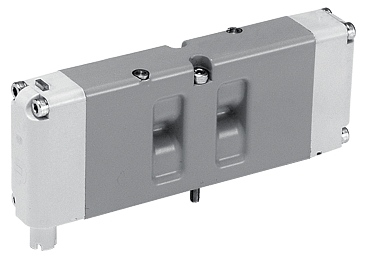




ISO 15407-2 [W66 Series] Spool & Sleeve, Plug-in Connection
![ISO 15407-2 [W66 Series]](https://ross-admin-global-us-east.s3.us-east-2.amazonaws.com/production/uploads/series_image/image/2207/ISO_15407-2_W66_Series_dropc_ss_18mm-Valve.png)
 Installation Instructions
Product Catalog - ISO 15407-2
Installation Instructions
Product Catalog - ISO 15407-2
- Pilot operation provides high shifting force with low power consumption
- Integrated plug-together manifold electrical connections; serial bus communication compatible
- Operating pressure from vacuum to 145 psig (9.9 bar)
- Solenoids polarity insensitive with surge suppression and indicator light
- Single sub-base and manifold base mounting
Directional Control Valves ISO 15407-2 W66 Series Product Overview
The ROSS® 15407-2 valves W66 Series are base mounted spool and sleeve valves that conform to the ISO standards 15407-2 mounting interface. Manifold bases feature modular plug-together electrical connections terminating at end plates, offering a variety of terminal strip or multi-pin interfaces.
These ISO Size 0 (26mm) and 00 (18mm) valves are available as, 2- and 3-position, 5-ported 4-way valves. Solenoid pilot options include a locking or non-locking override, and either internal or external pilot supply. The spool and sleeve design means there are no seals to wear out.
Please refer to the side and below for links to easily navigate and download ROSS Controls Directional Control Valves ISO 15407-2 W66 Series catalogs, installation instructions, and technical data. Additionally, you have the option to filter through all available options to discover Directional Control Valves ISO 15407-2 W66 Series variant that meets your requirements.
loading...
loading...
Product Overview
The ROSS Controls W66 Series ISO 15407-2 () is a line of base-mounted spool and sleeve directional control valves conforming to the ISO 15407-2 mounting interface standard. Available in ISO Size 01 (26 mm) and Size 02 (18 mm), these valves share the same compact spool and sleeve valve body as the ISO 15407-1 W66 Series but replace individual M12 drop-cord connections with an integrated plug-together manifold electrical system.
The integrated manifold electrical connection is the defining characteristic of the ISO 15407-2 configuration. Electrical signals are carried through a modular internal bus that runs the length of the manifold assembly and terminates at end plates offering terminal strip or multi-pin interfaces. This architecture routes all wiring to a single connection point at the manifold perimeter, eliminating the dense cluster of individual valve cables found in drop-cord configurations and dramatically reducing harness assembly time on machine builds.
Serial bus communication compatibility is a key advantage for systems using fieldbus or industrial Ethernet architectures. The ISO 15407-2 W66 Series integrates with standard serial bus systems, allowing valve position feedback and diagnostics to be transmitted over a single communication cable rather than discrete wiring runs to each valve coil. This reduces total installed wiring, simplifies machine software configuration, and enables valve-level diagnostics from the PLC or higher-level control system.
The spool and sleeve construction design is identical to the ISO 15407-1 variant. There are no dynamic elastomeric seals on the main spool, which eliminates the primary wear failure mechanism in conventional spool valves. All solenoids are polarity insensitive with built-in surge suppression and an LED indicator light per solenoid. Pilot operation delivers high shifting force from a compact, low-power solenoid, making the W66 well suited to multi-station manifold assemblies where aggregate power draw is a design constraint.
Key Engineering Features
- Integrated Plug-Together Manifold Electrical Connections - Electrical signals route through a modular internal bus in the manifold body and terminate at end plates with terminal strip or multi-pin interfaces. This consolidates all valve wiring to a single harness connection point, reducing installation time, simplifying cable management, and lowering the number of field wiring connections subject to vibration and contamination.
- Serial Bus Communication Compatibility - The ISO 15407-2 W66 manifold system is designed to integrate with standard industrial serial bus architectures including fieldbus and industrial Ethernet protocols. Serial bus integration allows valve control and status signals to be transmitted over a single communication cable, enabling valve-level diagnostics and coil status monitoring from the machine control system.
- Spool and Sleeve Construction - No Dynamic Seals to Wear - The main spool shifts within an aluminum sleeve with precision diametral clearance and no elastomeric dynamic seals on the spool. This construction eliminates seal wear, seal extrusion, and seal swelling as failure mechanisms, providing consistent internal leakage performance across the full rated service life.
- Polarity-Insensitive Solenoids with Surge Suppression - All solenoids accept either DC polarity without damage and incorporate built-in surge suppression to protect PLC solid-state outputs from inductive kickback during de-energization. No external snubber or freewheeling diode is required on the DC control circuit.
- LED Indicator Light Per Solenoid - A single LED per solenoid coil provides immediate energized-state confirmation visible without test equipment, accelerating commissioning and reducing troubleshooting time during maintenance.
- ISO 15407-2 Compliant Mounting Interface - Full conformance to ISO 15407-2 port locations, mounting bolt pattern, orifice sizing, and pilot passage geometry ensures dimensional interchangeability of valve bodies on compliant manifold bases, protecting the design from single-source dependency.
- ISO Size 01 (26 mm) and Size 02 (18 mm) Availability - Two valve body widths address different flow and station-pitch requirements. Size 01 delivers Cv 1.1 for medium-flow circuits. Size 02 delivers Cv 0.55 for compact machine sections where maximum valve density per unit of manifold length is required.
- Locking and Non-Locking Manual Override Options - Locking and non-locking flush manual overrides are available on all solenoid pilot configurations, allowing forced spool actuation during commissioning and troubleshooting without applying power to the solenoid coil.
- Internal and External Pilot Supply - All configurations are available with internal or external pilot supply. External pilot allows reliable operation at inlet pressures below the minimum internal pilot threshold and is required for vacuum service applications.
- Single Sub-Base and Multi-Station Manifold Mounting - The W66 ISO 15407-2 mounts on single sub-bases for individual valve installations or on multi-station manifold bases for centralized port management. Manifold configurations support modular assembly with station isolation using intermediate plates.
- Variety of Terminal Strip and Multi-Pin End Plate Interfaces - Manifold end plates are available in multiple electrical interface styles including terminal strip, D-sub, and round multi-pin connectors, allowing the manifold assembly to match the machine cabinet wiring interface without adapters.
- Cast Aluminum Valve Body with PBT End Caps - Die-cast aluminum valve bodies with polybutylene terephthalate (PBT) end caps provide the structural strength, dimensional stability, and chemical resistance required for standard industrial environments without unnecessary weight.
Technical Specifications
General Specifications
| Parameter | Specification |
| Valve Series | W66 |
| Valve Standard | ISO 15407-2 |
| Valve Type | Directional Control |
| Construction | Spool and Sleeve |
| Actuation | Electrical - Solenoid Pilot Controlled |
| Valve Functions | 5/2 (Single Solenoid, Double Solenoid); 5/3 (Double Solenoid, Closed/Power/Open Center) |
| ISO Sizes Available | Size 02 (18 mm), Size 01 (26 mm) |
| Mounting | Base Mounted - Single Sub-Base or Manifold |
| Electrical Connection | Integrated plug-together manifold connections; serial bus communication compatible |
| Operating Pressure | Vacuum to 145 psig (Vacuum to 9.9 bar) |
| Pilot Supply - Size 02 (18 mm) 5/2 | 30 psig (2.07 bar) minimum |
| Pilot Supply - Size 01 (26 mm) 5/2 | 25 psig (1.73 bar) minimum |
| Pilot Supply - 5/3 all sizes | 35 psig (2.41 bar) minimum |
| External Pilot Supply | Must be equal to or greater than inlet pressure |
| Fluid Media | Filtered compressed air |
| Ambient Temperature | 5 to 120 F (-15 to 50 C) |
| Media Temperature | 5 to 120 F (-15 to 50 C) |
| Manual Override | Flush rubber non-locking (standard); locking override available |
| Valve Body Material | Cast Aluminum |
| End Cap Material | Polybutylene Terephthalate (PBT) |
| Fasteners | Zinc Plated Steel |
| Coil Encapsulant | Thermoset Plastic |
| Thread Options | NPT; G (BSPP) |
Temperature Ratings
| Configuration | Ambient Temperature | Media Temperature |
| All Solenoid Pilot Controlled Configurations | 5 to 120 F (-15 to 50 C) | 5 to 120 F (-15 to 50 C) |
Electrical Data (Solenoid Pilot Valves)
All solenoids are rated for continuous duty. Solenoids are polarity insensitive with built-in surge suppression and one LED indicator light per solenoid. Manifold electrical connections terminate at end plates with terminal strip or multi-pin interfaces.
| Voltage | Power Consumption |
| 24 VDC (each solenoid) | 6.0 watts (double solenoid configuration) |
| 110-120 VAC, 50/60 Hz | 1.0 VA inrush; 2.0 VA holding per solenoid |
| 230-240 VAC, 60 Hz | Contact ROSS Controls |
Flow Performance Data
Average Cv and weight data per ISO size and actuation type for W66 Series ISO 15407-2 spool and sleeve valves.
| ISO Size | Valve Function | Avg Cv | Weight lb (kg) |
| 02 (18 mm) | 5/2 Single Solenoid Pilot | 0.55 | 0.3 (0.15) |
| 02 (18 mm) | 5/2 Double Solenoid Pilot | 0.55 | 0.4 (0.16) |
| 02 (18 mm) | 5/3 Double Solenoid Pilot | 0.55 | 0.4 (0.16) |
| 01 (26 mm) | 5/2 Single Solenoid Pilot | 1.1 | 0.6 (0.25) |
| 01 (26 mm) | 5/2 Double Solenoid Pilot | 1.1 | 0.6 (0.25) |
| 01 (26 mm) | 5/3 Double Solenoid Pilot | 1.1 | 0.6 (0.25) |
Certifications & Compliance
| Certification/Standard | Detail |
| ISO 15407-2 Compliance | Full conformance to ISO 15407-2 mounting interface standard, ensuring dimensional interchangeability of valve bodies, port locations, pilot passages, and fastener patterns across all compliant manifold systems. |
| CSA Certificate of Compliance | CSA certification for Canadian Standards Association electrical and safety requirements applicable to industrial control equipment in Canada and the United States. |
| Declaration of Conformity (CE) | CE marking per applicable EU directives confirming compliance with European health, safety, and environmental protection requirements for the industrial machinery market. |
| CRN Certification | Canadian Registration Number certification for applicable pressure-containing configurations, satisfying provincial boiler and pressure vessel regulations across Canadian provinces. |
| EAC Certification | Eurasian Conformity (EAC) mark for distribution and installation in Eurasian Economic Union member states. |
Typical Applications & Industries
High-Density Multi-Axis Automation Systems
- Robotic assembly cells with 20 or more pneumatic actuators per manifold zone, where centralized manifold wiring via terminal strip or multi-pin end plates eliminates the cable management burden of individual drop cords and simplifies teach-pendant and control cabinet routing.
- Automated guided vehicle (AGV) and mobile platform pneumatic circuits, where minimizing wiring connector count and weight per manifold reduces maintenance points in a mobile environment.
- Multi-axis Cartesian gantry systems with independently controlled axes, where serial bus integration enables valve status to be polled from the motion controller without additional I/O hardware.
Semiconductor and Electronics Manufacturing
- Wafer handling and substrate transfer systems requiring cleanroom-compatible valve manifolds where centralized wiring reduces particle-generating connectors within the process envelope.
- Component placement machines in surface-mount technology (SMT) lines where high valve density per machine frame and fast cycle rates demand compact, reliable spool valve manifolds with minimal wiring overhead.
- Automated optical inspection (AOI) and test handlers using vacuum and blow-off circuits controlled by compact ISO 15407-2 manifold assemblies.
Automotive Final Assembly and Body Shop
- Door, hood, and trunk lid fitting stations with dense pneumatic tooling where manifold-mounted valves with plug-together wiring reduce harness assembly time per tool carrier.
- Underbody assembly and fastener driving stations where fieldbus-connected valve manifolds enable tool status feedback for statistical process control (SPC) data collection at the valve level.
- Seating and trim installation lines requiring flexible manifold configurations with independent pressure zones for different tooling circuits on the same base assembly.
Food and Beverage Processing
- Primary packaging lines with multiple form, fill, and seal stations where centralized manifold wiring reduces wiring penetrations into process enclosures, simplifying washdown sealing requirements.
- Filling and capping carousel machines where space-optimized ISO 15407-2 manifolds with multi-pin end plates accommodate high valve counts in rotating or indexing machine sections.
- Ingredient metering and dispensing systems where serial bus connectivity allows recipe-driven valve sequencing from a central PLC without dedicated I/O cards for each valve coil.
Ordering and Model Number Configuration
The ROSS W66 Series ISO 15407-2 model number encodes the same series, revision, and size information as the ISO 15407-1 variant, with the electrical interface determined by the manifold base and end plate selection rather than the valve body itself. The valve body ordering structure below reflects the valve-level configuration; manifold and end plate accessories are ordered separately.
|
Model Number Example: W 6 6 7 7 A 0 4 0 1 W
W Series prefix (W = W66 valve family) 66 ISO 15407-2 series designation 7 Configuration indicator 7 Revision Level indicator A Revision Level 0 ISO Size: 0 = Size 02 (18 mm); 1 = Size 01 (26 mm) 4 Interface code (ISO 15407-2) 01 Actuation/Override/Pilot Code (see below) W Voltage: W = 24 VDC; Z = 110-120 VAC 50/60 Hz; Y = 230-240 VAC 60 Hz
Actuation / Override Codes - 5/2 Single Solenoid Pilot: 61 Non-Locking Override, Internal Pilot 81 Non-Locking Override, External Pilot 71 Locking Override, Internal Pilot 91 Locking Override, External Pilot
Actuation / Override Codes - 5/2 Double Solenoid Pilot: 67 Non-Locking Override, Internal Pilot 87 Non-Locking Override, External Pilot 77 Locking Override, Internal Pilot 97 Locking Override, External Pilot
Center Position Codes - 5/3 Double Solenoid Pilot: 61 Closed Center, Non-Locking, Internal Pilot 63 Power Center, Non-Locking, Internal Pilot 67 Open Center, Non-Locking, Internal Pilot 71 Closed Center, Locking, Internal Pilot 73 Power Center, Locking, Internal Pilot 77 Open Center, Locking, Internal Pilot 81 Closed Center, Non-Locking, External Pilot 91 Closed Center, Locking, External Pilot |
The electrical interface type (terminal strip, D-sub, round multi-pin) is determined by the manifold end plate selection, not the valve body model number. Specify the manifold base and end plate configuration separately when ordering a complete manifold assembly.
Serial bus system compatibility depends on the specific bus adapter and end plate module selected. Contact ROSS Controls to confirm supported fieldbus and industrial Ethernet protocols for the intended control architecture.
Voltage suffix W = 24 VDC, Z = 110-120 VAC 50/60 Hz, Y = 230-240 VAC 60 Hz. For other voltages, contact ROSS Controls.
External pilot variants (codes 8x and 9x) are required when inlet pressure is below the minimum internal pilot threshold or for vacuum circuit applications.
Accessories
Manifold Bases with Integrated Electrical Bus
Multi-station manifold bases carry the integral electrical bus that daisy-chains solenoid signals from station to station and terminates at the manifold end plate. Manifolds are specified by number of stations, valve size compatibility (Size 01 or Size 02), and thread type for common supply and exhaust ports. Common supply and exhaust passages simplify pneumatic plumbing while the internal bus eliminates individual valve wiring.
Manifold End Plates with Terminal Strip Interface
Terminal strip end plates provide screw-terminal connections for each solenoid coil signal wire in the manifold assembly, accommodating discrete hardwired connections from a machine control cabinet. This is the standard configuration for systems using conventional PLC discrete I/O output cards.
Manifold End Plates with Multi-Pin Connector Interface
Multi-pin connector end plates consolidate all solenoid signal connections into a single multi-pin receptacle that mates with a machine harness assembly. D-sub and round multi-pin interfaces are available, reducing connector count and improving resistance to vibration and contamination compared to individual terminal block connections.
Serial Bus Communication Modules
Bus adapter modules integrate directly into the ISO 15407-2 manifold electrical system to enable fieldbus or industrial Ethernet control of all valve stations through a single communication cable. Valve control and status feedback are accessible from the machine PLC or network controller without dedicated discrete I/O cards for each coil. Contact ROSS Controls to confirm available bus protocols and module compatibility.
Intermediate Station Isolation Plates
Intermediate plates inserted between manifold stations allow individual pressure zone isolation, blocking supply or exhaust passages at specific stations without requiring separate manifold assemblies. This enables circuits with different operating pressures or independent exhaust zones to share the same manifold rail.
Single Sub-Bases
Individual sub-bases are available for applications where a single W66 ISO 15407-2 valve is installed outside a multi-station manifold. Sub-bases provide dedicated port connections in NPT or G thread for Size 01 and Size 02 valve bodies.
Interposed Flow Controls
Interposed meter-out flow controls mount between the valve body and base to provide independent exhaust flow adjustment for actuator speed control without external needle valves. Size 02: RPS5642P. Size 01: RPS5542P.
Exhaust Silencers
Aluminum exhaust silencers for 1/8", 1/4", and 3/8" port sizes rated to 290 psig (20 bar) for installation at manifold exhaust ports. Silencer Cv must equal or exceed valve exhaust capacity to prevent back pressure from degrading spool shifting performance.
Warning: Silencer Cv must equal or exceed valve exhaust Cv. Contaminated silencers must be replaced at service intervals as restriction from collected particulate directly increases exhaust port back pressure and can cause partial or failed valve shifting.
Related Products & Accessories
- ISO 15407-1 W66 Series (Series 240) - The drop-cord M12 connection variant of the W66 family using individual 4-pin M12 connectors per valve body. Shares the same spool and sleeve valve construction on the ISO 15407-1 mounting interface and is preferred when individual valve wiring flexibility is required. https://www.rosscontrols.com/en/series/240-iso-15407-1-w66-series
- ISO 5599-1 W60 and W64 Series (Series 242) - Larger ISO 5599-1 base-mounted valves in ISO Size 1, 2, and 3 for higher flow applications with individual EN 175301-803 electrical connections. Covers both spool and sleeve (W60) and poppet (W64) constructions. https://www.rosscontrols.com/en/series/242-iso-5599-1-w60-w64-series
- ISO 5599-2 W65 Series (Series 243) - ISO 5599-2 spool and sleeve valves in ISO Size 1, 2, and 3 with integrated plug-together manifold electrical connections for larger bore, higher-flow circuit requirements. https://www.rosscontrols.com/en/series/243-iso-5599-2-w65-series
- Exhaust Silencers - Aluminum exhaust silencers for 1/8", 1/4", and 3/8" port sizes rated to 290 psig for installation at manifold exhaust ports. https://www.rosscontrols.com/en/series/90-silencers
- Electrical Connectors - DIN and M12 connector assemblies, prewired drop-cord cables, and lighted indicator connectors compatible with ROSS solenoid valve product lines. https://www.rosscontrols.com/en/series/91-electrical-connectors
- Lockout Valves (L-O-X Energy Isolation) - ROSS L-O-X lockout valves for upstream energy isolation of W66 manifold assemblies during maintenance per OSHA lockout/tagout requirements. https://www.rosscontrols.com/en/series/1287-lockout-valves-15-series
Frequently Asked Questions (FAQ)
Q: What is the primary difference between the ISO 15407-1 and ISO 15407-2 versions of the W66 Series?
A: The valve body construction, spool and sleeve design, and performance specifications are identical. The difference is entirely in the electrical connection architecture. The ISO 15407-1 (Series 240) version provides individual 4-pin M12 micro connectors on each valve body for drop-cord wiring. The ISO 15407-2 () version routes electrical connections through an integrated bus in the manifold that terminates at a shared end plate with a terminal strip, D-sub, or multi-pin interface. ISO 15407-2 is specified when centralized wiring, serial bus integration, or minimized cable count is the priority.
Q: How does the integrated manifold electrical connection reduce wiring time compared to individual M12 drop cords?
A: With ISO 15407-1 drop-cord wiring, each valve requires an individual M12 cable routed from the valve to a control cabinet, which scales linearly with valve count. A 20-station manifold requires 20 individual cable assemblies. With the ISO 15407-2 integrated bus, all 20 stations connect to a single multi-pin connector or terminal strip at the manifold end plate, reducing the number of field wiring connections from 20 to 1. This reduces harness assembly time, number of potential connector failure points, and cable tray fill significantly.
Q: What serial bus protocols are supported by the W66 ISO 15407-2 manifold system?
A: The W66 ISO 15407-2 manifold system is designed for serial bus communication compatibility. Supported fieldbus and industrial Ethernet protocols depend on the specific bus adapter module selected. Contact ROSS Controls at (800) 438-7677 or visit rosscontrols.com to confirm currently available bus protocols and adapter module compatibility for the intended control architecture.
Q: Can ISO 15407-1 and ISO 15407-2 valves be physically interchanged on the same manifold base?
A: No. Although the valve bodies are mechanically similar, ISO 15407-1 and ISO 15407-2 manifest different electrical connection architectures within the manifold base. ISO 15407-1 bases provide individual M12 connection points at each station, while ISO 15407-2 bases contain the integrated bus tracks for the plug-together connection system. Valve bodies must be matched to the corresponding base standard.
Q: What center position options are available for 5/3 double solenoid W66 valves?
A: Three center positions are available: Closed Center (all five ports blocked when both solenoids are de-energized), Power Center (supply port opens to both actuator ports with exhausts blocked), and Open Center (supply is blocked and both actuator ports are connected to exhaust). Center position selection depends on the required actuator behavior when the control system removes power from both solenoids, such as holding position under load, equalizing pressures across the actuator, or allowing the actuator to float free.
Q: What is the minimum pilot supply pressure for 5/3 valves?
A: All 5/3 double solenoid configurations require a minimum internal pilot supply pressure of 35 psig (2.41 bar) regardless of ISO size. This is higher than the 5/2 single solenoid minimum because the 5/3 valve must balance pilot pressure against a spring-centered return mechanism. If the system operating pressure falls below 35 psig, the external pilot option must be specified with a dedicated pilot supply at or above this threshold.
Q: Are locking manual overrides available on ISO 15407-2 W66 valves?
A: Yes. Both locking and non-locking flush manual overrides are available on all solenoid pilot W66 valve configurations regardless of whether they use ISO 15407-1 or ISO 15407-2 electrical connections. The override acts directly on the pilot mechanism and operates independently of the electrical connection type.
Q: Does the spool and sleeve design require in-line air lubrication?
A: Air line lubrication is not required or recommended for standard W66 Series operation. The spool and sleeve design functions on filtered, unlubricated compressed air. Introducing oil mist lubricant into a previously unlubricated circuit can cause sludge buildup in the spool clearance as the oil accumulates particulate, potentially increasing spool friction over time. If a system lubricator is already present upstream of the valve, contact ROSS Controls to confirm compatibility.
Q: What happens to actuator position if electrical power is lost on a 5/2 single solenoid valve?
A: A 5/2 single solenoid valve is a spring-return design. When the solenoid is de-energized, either by deliberate command or by power loss, the spring returns the spool to its normal position. A normally closed (NC) valve returns its actuator port 2 to exhaust and connects actuator port 4 to supply, or vice versa for normally open. The specific actuator behavior on power loss depends on the valve's normal position designation and the actuator circuit design.
Q: Can the W66 ISO 15407-2 manifold be extended in the field?
A: Manifold assemblies are typically configured as a complete unit at the factory or assembly stage. Adding stations in the field requires disassembling the manifold, inserting additional valve stations, replacing the end plates to match the new station count, and re-routing the electrical bus. For applications where future expansion is anticipated, it is more efficient to specify a manifold with additional blank stations at initial installation rather than planning for field expansion.
Q: What is the operating temperature range for W66 Series valves?
A: Both ambient and media temperatures are rated at 5 to 120 F (-15 to 50 C) for all W66 Series configurations. This range covers standard industrial environments including those with moderate ambient heating from machine heat generation. For applications exceeding 120 F ambient, contact ROSS Controls to discuss suitable alternative products.
Q: Are CAD models and dimensional drawings available for W66 ISO 15407-2 manifold assemblies?
A: Yes. Two-dimensional drawings and three-dimensional CAD models are available for W66 valve bodies, sub-bases, and manifold components through the ROSS Controls website at rosscontrols.com. Dimensional drawings for multi-station manifold assemblies are available based on the specified configuration. Contact ROSS Controls for drawings of specific manifold assemblies with defined station counts and end plate configurations.
Installation & Maintenance Guidelines
- Before assembling valves onto the manifold base, inspect the manifold rail for damage to the internal electrical bus contacts and the pneumatic sealing surfaces at each station. Any damage to bus contacts can cause intermittent solenoid faults that are difficult to diagnose once the assembly is installed in the machine.
- Install all station sealing gaskets on the manifold base before mounting any valve bodies. The gaskets seal both the pneumatic port interfaces and the electrical bus contacts between valve and manifold. Missing or misaligned gaskets can simultaneously create pneumatic cross-port leakage and electrical signal faults at the affected station.
- Torque valve mounting screws to the specification in the ROSS W66 installation instructions. The clamping force on the mounting screws compresses the station gasket to achieve the required sealing. Under-torquing creates leakage at the valve-to-manifold interface; over-torquing can distort the valve body and prevent the spool from moving freely.
- When connecting the manifold to the machine control cabinet, verify that the end plate connector and machine harness connector are fully mated and latched before applying electrical power. Partially mated multi-pin connectors are a common source of intermittent valve faults that replicate as random machine stops.
- For serial bus connected manifolds, configure the bus node address and check communication status before entering the valve into automatic control. Verify that each valve station responds correctly to command signals from the PLC or control system, confirming that the bus is fully addressing all stations. A missing address can allow valve stations to remain uncontrolled during automatic operation.
- Apply supply pressure slowly at commissioning by opening the upstream supply valve gradually rather than applying full pressure instantaneously. Rapid pressure rise can cause momentary hydraulic shock in the manifold supply passage that may briefly exceed rated pressure if the supply volume is large.
- Perform a manual override test at each station before connecting to the electrical supply. Press the flush manual override button while supply pressure is applied and confirm that the actuator moves to the shifted position and returns on release. This verifies correct pneumatic function at every station without requiring electrical troubleshooting.
- Supply filtered compressed air at a minimum of 40-micron filtration quality to the manifold supply port. Contamination that passes the filter accumulates in spool clearances and can progressively restrict spool travel, causing slow or incomplete shifting that appears as actuator timing drift.
- Do not exceed the rated ambient temperature of 120 F (50 C) at the manifold installation location. The integrated electrical bus and solenoid coil thermoplastic components are rated to this temperature. Exceeding it can cause coil insulation degradation, bus connector softening, and accelerated spool clearance changes that affect internal leakage.
- Label the manifold end plate connector and all associated field wiring with the manifold assembly reference designator and valve station numbering from the machine electrical diagram. Manifold assemblies with identical external appearance but different internal station configurations create misidentification risks during service if labeling is absent.
- For external pilot supply configurations, confirm that the pilot supply pressure is at or above 30 psig (Size 02) or 25 psig (Size 01) for 5/2 valves, or 35 psig for all 5/3 valves before commissioning. Connect the pilot supply to the dedicated external pilot port on the manifold base, not the main supply port.
- Install exhaust silencers at all manifold exhaust ports only after verifying that silencer Cv ratings meet or exceed the manifold exhaust capacity. Multiple valves exhausting simultaneously through a common manifold exhaust passage means the total exhaust flow is additive; size silencers for the maximum simultaneous exhaust event in the machine cycle.
- When removing a valve from a populated manifold for service, depressurize the manifold supply first and confirm zero pressure at the supply port before loosening valve mounting screws. Removing a valve under pressure will cause an uncontrolled pneumatic release from the manifold supply passage at the open station.
- After completing installation and before machine run-in, record the serial number or date code from each installed valve and the corresponding manifold assembly. This baseline record supports future warranty claims and replacement part ordering when individual stations require service.
Warranty & Global Support
ROSS Controls provides a one-year warranty on all products, covering defects in material and workmanship from date of purchase.
Global technical support is available through ROSS Controls offices in the USA (headquarters in Ferndale, Michigan), Canada, Brazil, Germany, France, United Kingdom, India, China, and Japan.
Contact ROSS Controls USA Customer Service at (800) GET-ROSS (800-438-7677) or Technical Service at (888) TEK-ROSS (888-835-7677). Visit rosscontrols.com for product configuration, manifold assembly configuration tools, and distributor locator services.
For complete technical data including dimensional drawings, electrical bus specifications, end plate interface documentation, and serial bus adapter information, visit the ROSS Controls ISO 15407-2 W66 Series product page at rosscontrols.com.
Download Catalog: https://www.rosscontrols.com/en/series/241-iso-15407-2-w66-series
Download Documents
ISO 15407-2 [W66 Series]